
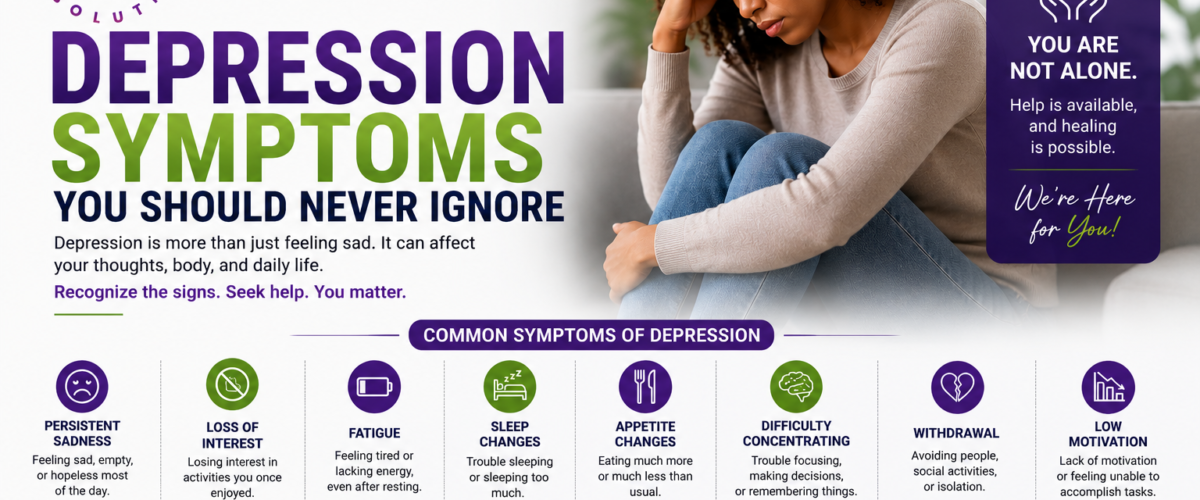
Depression Symptoms You Should Never Ignore

Life comes with difficult seasons.
Everyone feels sad after losing someone they love, facing disappointment, or going through a stressful period. Those emotions are part of being human. They usually soften with time, even if the healing process takes weeks or months.
Depression is different.
It can quietly change the way you think, feel, and experience everyday life. It affects motivation, relationships, physical health, and even simple tasks like getting out of bed or preparing a meal. Many people continue working, caring for their families, and meeting responsibilities while silently struggling inside.
One of the biggest challenges is that depression does not always look the way people expect. It is not always constant crying or obvious sadness. Sometimes it appears as exhaustion that never improves, irritability that strains relationships, or a loss of interest in activities that once brought happiness.
Many people ask themselves questions like, “Am I just having a bad week?” or “Why can’t I enjoy anything anymore?” These are common concerns, and they deserve thoughtful answers.
Recognizing depression symptoms early can make a meaningful difference. Early support often leads to better outcomes and helps prevent symptoms from becoming more severe over time.
What Is Depression?
Depression is a medical condition that affects emotional, psychological, and physical wellbeing. It is often referred to as a mood disorder because it influences the way a person thinks, feels, and responds to daily life.
Unlike temporary sadness, depression persists. Symptoms often last for weeks or months and begin affecting work, relationships, sleep, appetite, and overall quality of life.
Many people try to push through these feelings, believing they simply need to work harder or stay positive. Unfortunately, depression rarely improves through willpower alone.
Professional care, healthy coping strategies, and in some cases depression treatment can help people regain stability and enjoy life again.
The Difference Between Sadness and Depression
One of the biggest misconceptions is believing sadness and depression are the same.
Sadness usually has a clear cause.
Perhaps you received disappointing news. Maybe a relationship ended or you lost a loved one. Although these experiences can be deeply painful, emotions gradually begin to shift as time passes.
Depression is different because it often changes how your entire world feels.
You may wake up every morning feeling emotionally drained without fully understanding why. Activities you once enjoyed no longer feel rewarding. Even positive events may seem emotionally distant.
A person with depression may smile during conversations, complete work assignments, and attend family gatherings while privately feeling empty inside.
This hidden struggle is one reason depression is sometimes called an invisible illness.
Early Depression Symptoms in Adults
Depression often develops gradually.
Most people do not wake up one morning feeling completely different.
Instead, subtle changes begin to appear.
You may notice persistent sadness that lingers throughout the day. Motivation becomes harder to find. Tasks that once felt simple suddenly require significant effort.
Some people begin withdrawing from friends and family without realizing it.
Others become unusually irritable or impatient.
Changes in sleep are also common. Some people struggle with insomnia while others sleep much longer than usual but still wake up exhausted.
Changes in appetite can occur as well. Some lose interest in eating while others eat more frequently for comfort.
Difficulty concentrating becomes another warning sign. Reading, making decisions, remembering appointments, or staying focused at work may suddenly feel much more difficult.
These early signs are often dismissed as stress or burnout.
Sometimes they are.
Sometimes they are the first indication of depression.
Depression Symptoms You Should Never Ignore
Certain symptoms deserve prompt attention because they often indicate depression is significantly affecting daily life.
Persistent Low Mood
Feeling emotionally down for several days after a stressful event is understandable.
Feeling persistently sad, empty, or hopeless for weeks is different.
This ongoing low mood often becomes the foundation for many other symptoms.
People frequently describe it as carrying emotional weight they cannot put down.
Loss of Interest in Activities
One of the clearest depression symptoms is losing interest in things that once brought enjoyment.
Hobbies become chores.
Social events feel exhausting.
Even spending time with loved ones may no longer provide comfort.
This symptom often surprises people because it develops gradually.
They simply stop looking forward to the things they once loved.
Constant Fatigue
Depression affects energy in ways many people do not expect.
Someone may sleep eight or nine hours yet still wake up feeling completely exhausted.
Simple household tasks become overwhelming.
Returning emails feels difficult.
Preparing dinner seems impossible.
This type of fatigue is not simply being tired after a busy week.
It is an ongoing lack of physical and emotional energy.
Difficulty Concentrating
Many people associate concentration problems with stress.
Depression can create similar difficulties.
People often report reading the same paragraph repeatedly without remembering it.
Work performance may decline.
Decision making becomes slower.
Small choices suddenly feel overwhelming.
These cognitive changes are real and should never be dismissed as laziness.
Changes in Sleep
Sleep often changes significantly during depression.
Some individuals struggle to fall asleep.
Others wake throughout the night.
Some begin sleeping much longer than usual yet never feel rested.
Because sleep affects emotional health, these changes can create a cycle where depression worsens and quality of sleep continues to decline.
Appetite and Weight Changes
Depression affects eating habits differently from person to person.
Some lose interest in food entirely.
Others eat more frequently as a way to cope emotionally.
Unexpected weight changes without another medical explanation deserve attention, particularly when they occur alongside other symptoms.
Feelings of Worthlessness or Excessive Guilt
Many people living with depression become extremely self critical.
They blame themselves for situations outside their control.
They may believe they are disappointing others or failing in ways that are not supported by reality.
These thoughts can become persistent and emotionally exhausting.
Professional evaluation can help separate depression related thinking from objective reality.
Symptoms That Require Immediate Attention
While many depression symptoms develop gradually, some require urgent professional evaluation.
Thoughts of self harm, suicidal thoughts, or feeling that life is no longer worth living should never be ignored.
These experiences deserve immediate support.
Reaching out to a trusted family member, a mental health professional, or emergency services can be a lifesaving step.
Seeking help during these moments is an act of strength and self protection.
Why People Often Miss the Signs
One reason depression goes untreated is that people become accustomed to feeling unwell.
They assume everyone feels this exhausted.
They believe constant stress is simply part of adulthood.
Others worry about being judged.
Some fear that asking for help means they are weak.
In reality, depression affects people from every background.
Professionals, students, parents, business owners, healthcare workers, and retirees can all experience depression.
It is a medical condition, not a character flaw.
A Real Life Example
Imagine a woman who has worked as a teacher for fifteen years.
She enjoys helping students and has always been active with family and friends.
Over several months she notices that getting ready for work feels harder.
She stops reading books she once loved.
She begins declining invitations from close friends because she feels emotionally drained.
At first, she tells herself she is simply overworked.
Months later, the symptoms remain.
She eventually schedules a psychiatric evaluation and learns she is experiencing major depression.
With the right depression treatment, regular follow up, and support, she gradually begins reconnecting with her life.
Stories like this are common.
Depression often develops quietly.
Recognizing the signs early can change the direction of someone’s recovery.
raft.
When to Seek Professional Help for Depression
One question comes up again and again.
“How do I know when it’s time to ask for help?”
There isn’t a single answer that fits everyone. What matters most is how depression is affecting your daily life.
If your symptoms have lasted for two weeks or longer, interfere with work or school, make it difficult to maintain relationships, or leave you struggling to complete everyday tasks, it is time to speak with a qualified mental health professional.
Some people wait months because they hope things will improve on their own.
Others worry that seeking care means their symptoms are “serious enough.”
Mental health does not work that way.
You do not have to reach a crisis before asking for support. In fact, early treatment often leads to better outcomes and may prevent symptoms from becoming more severe.
Can Depression Go Away on Its Own?
This is another common question.
For some people, mild symptoms may improve after a stressful situation ends. A difficult project at work, a temporary life change, or emotional exhaustion can sometimes ease with rest and time.
Clinical depression is different.
Without treatment, symptoms may continue for months or even years. They can also become more severe or return after improving for a short period.
Waiting too long often affects relationships, career growth, physical health, and overall quality of life.
Seeking professional guidance does not mean you will automatically need medication.
It means you are giving yourself the opportunity to understand what is happening and explore appropriate treatment options.
How a Psychiatric Mental Health Nurse Practitioner Treats Depression
Many people are unfamiliar with the role of a Psychiatric Mental Health Nurse Practitioner, often called a PMHNP.
A PMHNP is an advanced practice registered nurse with specialized education and clinical training in mental health care.
They evaluate symptoms, diagnose mental health conditions, develop treatment plans, provide medication management when appropriate, and monitor progress over time.
Treatment begins with listening.
A PMHNP wants to understand more than a list of symptoms. They ask about your daily life, physical health, sleep patterns, family history, work, relationships, and the challenges you are facing.
This complete picture helps create a treatment plan that reflects your unique needs instead of using the same approach for everyone.
Depression Treatment Options
Depression treatment looks different for each person.
The right plan depends on symptom severity, medical history, personal preferences, and overall health.
Therapy
Therapy helps many people understand the thoughts, behaviors, and emotional patterns that contribute to depression.
It also provides practical tools for managing stress, improving relationships, and developing healthier coping strategies.
For some individuals, therapy alone is enough to create meaningful improvement.
Medication Management
Medication may be recommended when symptoms are moderate to severe or when depression significantly affects daily functioning.
Finding the right medication sometimes takes time.
A PMHNP monitors progress carefully, discusses possible side effects, and adjusts treatment when necessary.
The goal is always to find the safest and most effective option for each patient.
Lifestyle Changes
Healthy routines cannot replace professional care when depression is severe, but they often support recovery.
Regular sleep, balanced nutrition, physical activity, meaningful social connection, and stress management all contribute to emotional wellbeing.
Small changes practiced consistently often have a greater impact than dramatic short term efforts.
Medication Does Not Mean You Have Failed
Many people hesitate to begin medication because they fear it reflects personal weakness.
That belief prevents some individuals from receiving helpful treatment.
Depression involves changes in brain function, emotional regulation, and sometimes physical health.
Medication is one treatment option among many.
Some people need it temporarily.
Others benefit from longer term treatment.
There is no universal timeline.
The focus should remain on improving quality of life rather than judging the treatment itself.
Common Misconceptions About Depression
Misunderstandings continue to create barriers for many people.
One common belief is that depression is simply negative thinking.
Depression is far more complex.
Another misconception is that successful people cannot experience depression.
In reality, professionals, parents, business owners, students, healthcare workers, and community leaders experience depression every day.
Many continue functioning while quietly carrying an emotional burden others never see.
Some also believe talking about depression makes it worse.
Research and clinical experience suggest the opposite.
Open conversations with trusted professionals often become the beginning of recovery.
What Recovery Really Looks Like
Recovery rarely happens overnight.
Progress often comes in small steps.
A person may begin sleeping better before mood improves.
Someone else may notice they are enjoying conversations again after weeks of emotional numbness.
Others regain energy slowly over time.
Recovery does not always mean symptoms disappear completely.
It means learning effective ways to manage depression while rebuilding a fulfilling life.
Setbacks may happen.
They do not mean treatment has failed.
They often become opportunities to adjust the care plan and continue moving forward.
Supporting Someone Living With Depression
Family members often want to help but are unsure what to do.
Listening without judgment is one of the most valuable forms of support.
Simple statements like “I’m here for you” often mean far more than trying to solve the problem immediately.
Avoid telling someone to “cheer up” or “think positive.”
Depression is not a choice.
Encouraging professional care while remaining patient and supportive creates a safer environment for recovery.
Looking Beyond Symptoms
One aspect many articles overlook is that depression affects much more than emotions.
It influences physical health, concentration, relationships, work performance, confidence, and long term wellbeing.
Treating depression is not only about reducing sadness.
It is about helping people reconnect with the parts of life that matter most.
That broader perspective often makes the biggest difference.
Conclusion
Depression can develop gradually, making it difficult to recognize until it begins affecting nearly every part of life.
Persistent sadness, loss of interest, fatigue, changes in sleep, difficulty concentrating, hopelessness, and withdrawal from loved ones are depression symptoms that should never be ignored.
Seeking professional help is not a sign that you have failed.
It is a practical step toward understanding what you are experiencing and finding effective support.
A Psychiatric Mental Health Nurse Practitioner can evaluate your symptoms, discuss depression treatment options, and work with you to create a plan that fits your needs and goals.
Recovery is possible.
Many people who once felt overwhelmed by depression go on to build healthier, more fulfilling lives with the right care, patience, and ongoing support.
If depression has been affecting your daily life, consider reaching out to a qualified mental health professional. Taking that first step may open the door to meaningful and lasting improvement.